Chiara Nappi, PhD student in Neurosciences, on the Winter School on Clinical Neurotechnology: “I really wish I had taken more opportunities like this throughout my PhD”
6 March 2026
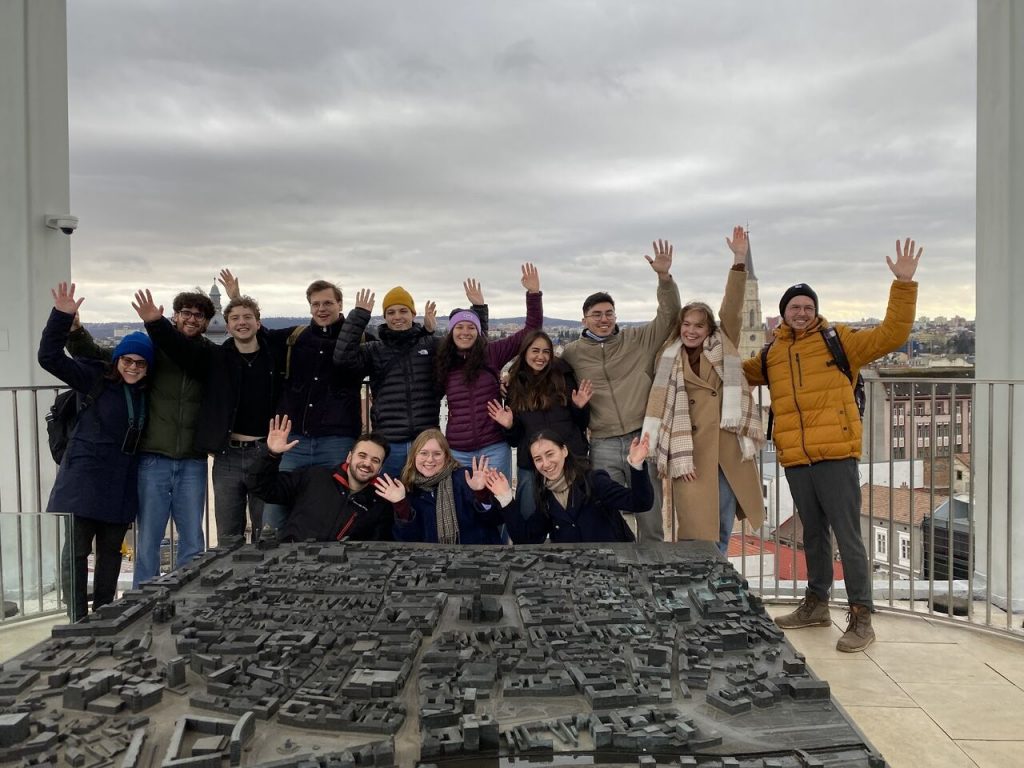
With the aim of exploring virtual neuroanatomy, learning clinical examination techniques, and working with technologies such as electroencephalography (EEG), eye tracking, and virtual reality, the Iuliu Hațieganu University of Medicine and Pharmacy in Cluj-Napoca -a NeurotechEU member- organised the Winter School on Clinical Neurotechnology from the 23rd to the 26th of February. Within the NeurotechEU alliance, Clinical Neurotechnology is defined as the integration of intervention and monitoring systems into digital brain health channels for patient care. Furthermore, the Alliance considers Clinical Neurotechnology to be one of the core pillars of the neurotechnology field.
The recipient of the place funded by the Miguel Hernández University of Elche (UMH) for this Winter School was Chiara Nappi, a student in the PhD Programme in Neurosciences at the Institute of Neurosciences (IN), a joint centre of the UMH and the Spanish National Research Council (CSIC). Nappi, who is currently in the final year of her doctorate, shared her experience with us.
Chiara, had you heard of the concept of clinical neurotechnology before this Winter School?
Not really. It was something abstract, based only on what I had read. However, after this school, I would define Clinical Neurotechnology as the technological tools made available to both medical clinical staff and patients.
Since it was a new concept for you, why did you decide to apply for a place on this programme?
As I am finishing my PhD, I wanted to explore the possibility of moving towards a more translational side—towards applicable clinical work. Right now, my research revolves around pain, and having the opportunity to delve into the clinical side allowed me to discover how patient interaction actually works: what is done, the types of tests, what is assessed, data interpretation, and so on. It is a way of opening doors and discovering new career options for after my doctorate. You could say I wanted to explore the clinical application of various technological tools.
How was the Winter School organised?
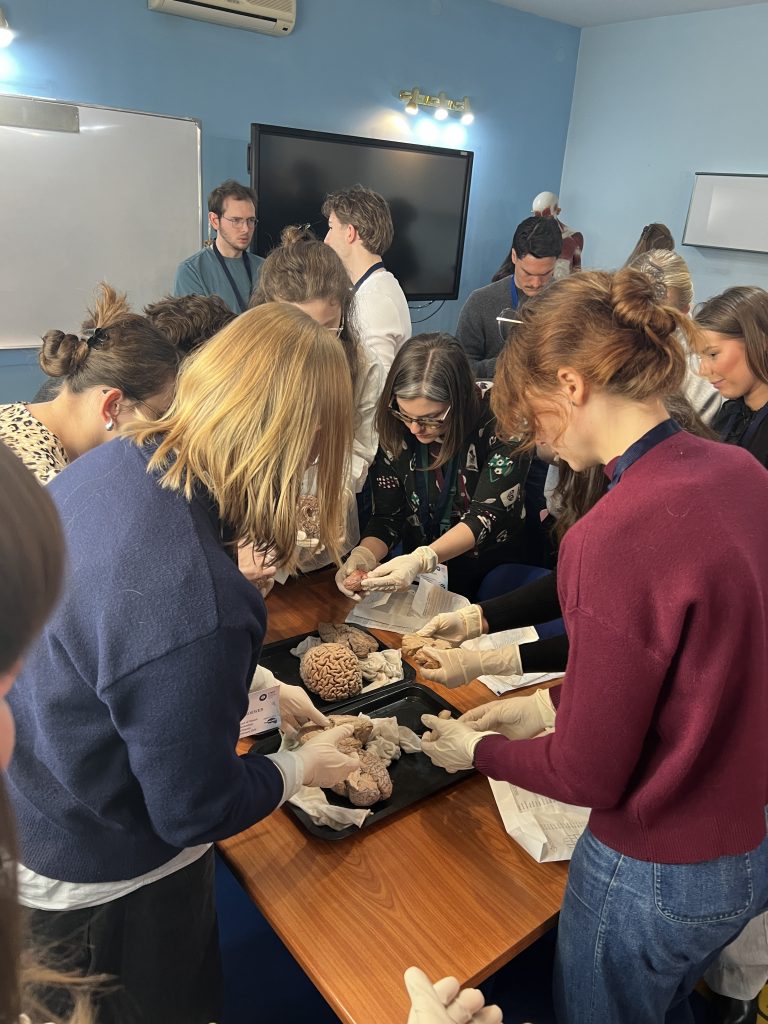
The programme lasted four days, with three different sessions each day. We had sessions focused on neuroplasticity and how cultural context affects individual cognition; we also had a neuroanatomy session, another explaining what electroencephalograms are and how to interpret them, and another where we discovered various neurorehabilitation techniques.
We also had practical sessions. In fact, one of the things I liked most was that everything we saw in theory was then applied with a patient. In some sessions, we were able to try out virtual games adapted for patients as neurorehabilitation exercises after suffering a stroke, for example.
Would you highlight any session in particular?
Definitely the last session, which dealt with neurorehabilitation. It so happened that one of my colleagues had been in an accident a few years ago and, as a result, had undergone some of the techniques we studied over the four days. She asked to share her story and, besides the powerful message of strength she gave us, she showed us her own tests so we could identify the types and even analyse them, just as we had seen in the previous theoretical sessions.
Another session I really enjoyed was neuroanatomy. Although the theoretical part was quite dense, in the practical session we used VR goggles to “navigate” inside the body. We could move any part of the body, such as removing a section of the skull or moving a vein aside to see what was behind it. That was incredible.
Were you familiar with the techniques they taught you there?
Not at a clinical level. I have learnt a lot. Even if I can’t perform an EEG by myself today, I now know where to start when interpreting one. Also, since the attendees had different backgrounds, I think that helped keep the level accessible for everyone without remaining just a basic introduction. I’d say we all came away with the core concepts.
Finally, Chiara, would you say this Winter School met your expectations?
Completely. It has been very interesting. I’ve learnt a lot of new things—truly a lot. And not only regarding the educational side itself but also the social aspect. In terms of networking, I really enjoyed it too. In fact, I really wish I had taken more opportunities like this throughout my PhD.