The Journées CORTICO welcome to PhDs from the UMH
27 May 2026
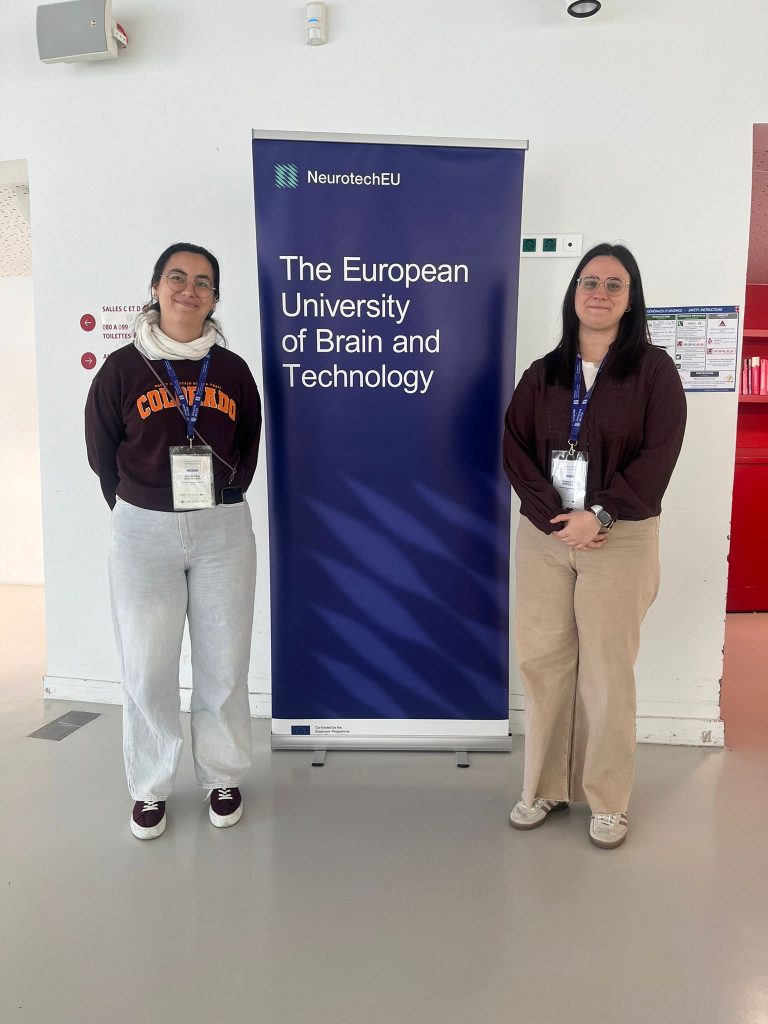
For three days, a large part of the expert and training community in brain–computer interfaces (BCIs) gathered for the annual Journées CORTICO 2026, held from 18 to 20 May 2026 in Lille, France. The non-profit scientific association Collectif pour la Recherche Transdisciplinaire sur les Interfaces Cerveau-Ordinateur (CORTICO), together with the European University of Brain and Technology – NeurotechEU, established a forum aiming to create synergies that advance research, development, and applications related to BCIs, neurotechnology, and cognitive neuroscience. PhD candidates from the Miguel Hernández University of Elche (UMH) Industrial and Telecommunications Technologies Programme, Cristina Polo Hortigüela and Desirée Gracia Laso, attended the conference.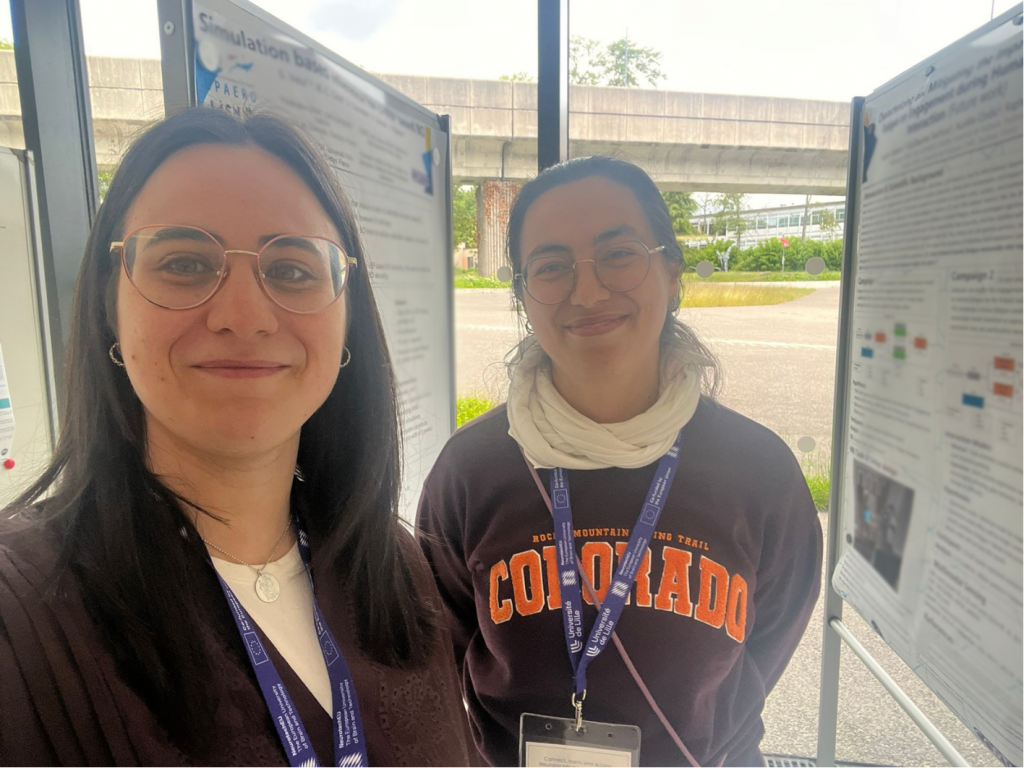
The event opened with a session dedicated to NeurotechEU students, showcasing initiatives developed within the framework of the Alliance. This featured keynotes on the Diversity, Equity, and Inclusion (DEI) toolkit—a tool designed to help students, educators, and support staff intentionally create more inclusive learning environments in higher education—and the LOOP Project, an initiative that bridges the University of Lille’s theoretical, technological, and clinical capabilities in neurotechnology with NeurotechEU. Furthermore, during this opening session, attendees explored how European universities are actively transforming their member institutions.
 Notably, this edition of the CORTICO conference coincided with the 20th anniversary of BCI research in France. According to Cristina Polo, “research into brain–computer interfaces is currently in a very active and promising phase,” adding that although numerous breakthroughs are taking place, “there is still considerable scope for further work, especially regarding real-time applications.”
On the other hand, one of the aspects highlighted by both doctoral students was the welcoming and accessible nature of the event. As Polo explained: “Being a more close-knit and less crowded gathering, it is much easier to attend all sessions, follow presentations more closely, and engage in more direct dialogue among attendees.” Moreover, since there were no parallel tracks, Desirée Gracia added, “taking full advantage of all the talks and sessions is far more feasible, and you don’t feel like you have to miss one session to attend another.”
Additionally, the UMH doctoral students had the opportunity to attend poster sessions, where they could converse with more experienced students and researchers. In Cristina’s case, she met a researcher working on artifact mitigation in brain signals—a recurring challenge in decoding these signals—and discussed the possibility of utilising their algorithm.
Conferences such as the CORTICO annual meeting, bolstered by the collaboration of NeurotechEU, serve as events that successfully connect individuals across different disciplines, institutions, and borders, fostering the development of a higher education network in neurotechnology.