NeurotechEU brings the neuroscience of ageing to people over 55 through a positive neurogerontology pilot programme
26 October 2026
2026 Pilto training on Neurogerontology ULille-UMH
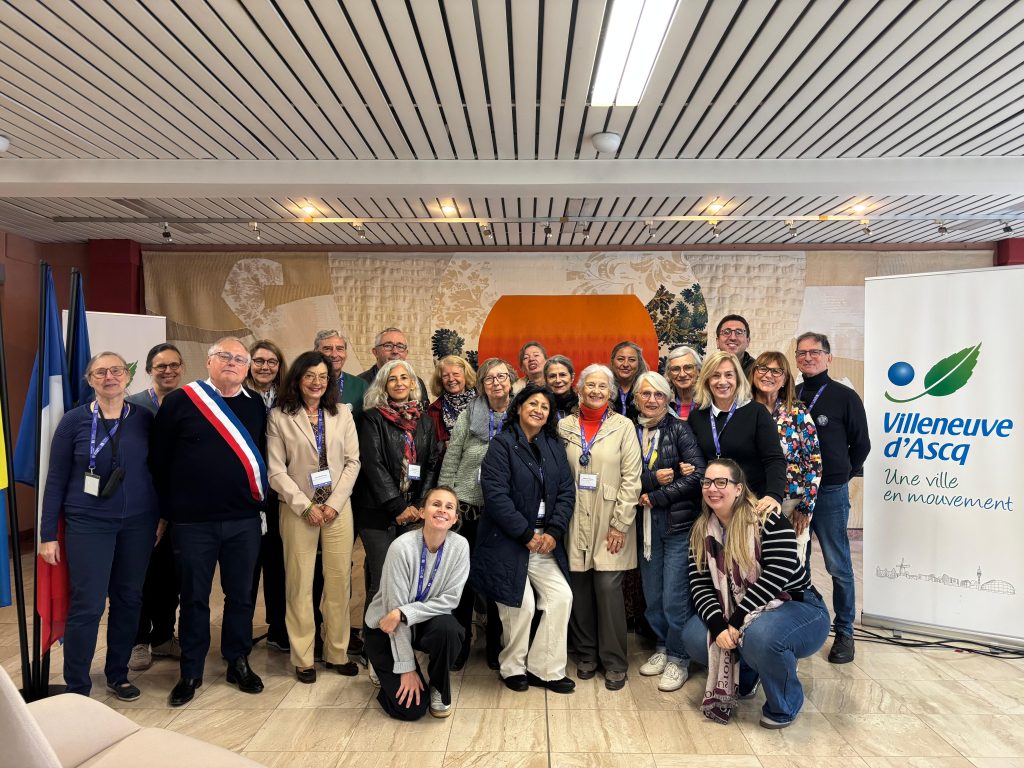
The University of Lille (ULille, France) and the Miguel Hernández University of Elche (UMH), both members of the European University of Brain and Technology (NeurotechEU), have launched the programme “Innovative pilot training in a positive approach of neurogerontology”, aimed at participants aged 55 and over. In line with European Union priorities to promote later-life learning, social inclusion, and healthy ageing, this project brought together a group of students from both universities from 19 to 23 October 2026 to explore how knowledge and learning about the brain can contribute to healthy, active, and inclusive ageing. The course was inaugurated by the Mayor of Villeneuve d’Ascq, Sylvain Estager; the Councillor for International Relations, Partnerships and European Affairs of the Municipality of Villeneuve d’Ascq, Jean Perlein; and Aurora Rodil Martínez, Councillor for Children, Family and Senior Citizens of the Elche City Council, highlighting the commitment of academic and municipal institutions to promoting active ageing and European cooperation.
This initiative involved 8 students from ULille’s Active Ageing Academic Certificate (AAAC) programme and 8 students from UMH’s University Experience Programme (Aulas Universitarias de la Experiencia, AUNEX). One of the most innovative aspects of the project is that the participants themselves collaborate in co-designing the training content using a participatory action research framework. Consequently, the project aims to develop a binational training model to serve as a benchmark for future European initiatives focused on learning in later adulthood. Furthermore, the insights and experience gained over the course of the week will be compiled into a best-practice guide to facilitate the implementation of similar programmes in other educational settings.
Over the 20 hours of training, participants explored key scientific insights into ageing from a positive, interdisciplinary perspective. Sessions covered topics such as brain ageing, lifelong plasticity and learning capacity, age-related cognitive changes, the importance of sleep and physical activity for brain health, as well as the role of innovative tools such as digital technologies, computational models, and bio/neurofeedback techniques. Additionally, the programme provided a platform to reflect on how we age and learn in different cultural contexts, combining neuroscientific advances with practical, participatory activities tailored specifically for older adults.
The programme has represented a unique opportunity for learners to engage with cutting-edge scientific knowledge on brain ageing and lifelong learning. The international and participatory nature of the initiative has encouraged dialogue, mutual learning, and the creation of new connections between French and Spanish learners, demonstrating that education can remain a powerful driver of personal growth and social engagement at any stage of life. “I am very grateful for this opportunity. Meeting new people, discovering a new place and learning to understand how we are changing as we age is a mix of experiences that I value”, adds Isabel Orestila, learner from the UMH.
The project addresses an increasingly evident demographic reality: the ageing of the European population presents major social and economic challenges, making access to lifelong learning essential for maintaining active citizenship beyond retirement. To address this and other societal needs, the ‘NeurotechEU Collaboration Funding Call’ has funded this and other initiatives across the University of Brain and Technology.